Best Time to Visit Dubai from India: A Season-by-Season Guide (2026)

January 9, 2026
Best Time to Visit Dubai from India A Season-by-Season Guide

Trekhops Travel Desk  ·  Updated 28th July 2026


There isn’t one perfect time to visit Dubai — the best time depends on what you value most: comfortable weather, lower prices, fewer crowds, or festival energy. That’s the honest answer, not a dodge, and it’s what this guide is built around.

Roughly eight months here are genuinely pleasant and four are genuinely difficult, with flight prices, hotel rates, and crowds all swinging hard between the two. Pick a month based on your actual priorities and you land in the right window automatically; pick based on what’s popular and you might pay peak prices for weather you never needed. This guide goes month by month, compares the seasons, and prices out the whole trip — including gateway-city fares, visa timing, and occupancy patterns most guides skip.

Quick Answer, if that's all you need: 

Best overall: January–February.
Best budget: July.
Best honeymoon: October.
Best for families: November–March.
Best for shopping: December–January.
Best weather, no exceptions: January.

Everything below explains the reasoning — and the exceptions — behind each of these.

What's Inside

Dubai Weather & Travel Seasons at a Glance

Three real seasons run this city, even though the calendar has twelve months in it. Here’s the two-minute version before we go month by month.

SeasonMonthsWeatherCrowdsHotel PricesOutdoor ActivitiesOverall Recommendation
WinterNov–Mar21–31°C, comfortableHigh to Very HighHigh to PeakExcellent, all-dayBest all-round choice
ShoulderApr & Oct25–36°C, warmModerateMid-rangeGood, mornings/eveningsBest value-to-comfort ratio
SummerMay–Sep32–42°C, hotLow to Very LowLowestLimited, early/late onlyBest for budget and indoor trips

Read this table as a trade-off curve, not three separate options. Winter costs the most and asks the least of you — the weather does all the work. Summer costs the least and asks the most — you do the work of planning around the heat. Shoulder season splits the difference almost exactly, which is exactly why repeat visitors quietly prefer it.

Notice, too, that “crowds” and “hotel prices” move in lockstep with the season, not independently. That’s not a coincidence — it’s the entire logic of Dubai’s tourism calendar in one table.

Tourist Season Timeline & Crowd Level by Month

Tourist season timeline: crowd levels follow the same winter–shoulder–summer pattern all year.

How to Choose Your Month: A Quick Decision Framework

Before the full detail below, here’s the shortest possible version — useful if you already know your one priority and just want the answer.

If You Can Only Optimize for One Thing

If You Are…Best Single MonthRunner-Up
A first-time visitorJanuaryDecember
On the lowest possible budgetJulyJune
Planning a honeymoonOctoberApril
A photography-focused travelerJanuaryFebruary
Visiting specifically for shoppingJanuaryDecember
Chasing luxury for lessJuneSeptember
Traveling with the familyNovemberFebruary
An adventure/outdoor travelerFebruaryNovember

These are deliberately single months, not ranges — useful as a starting point, though the full range for each priority (usually 2–4 comfortable months, not just one) is covered in depth throughout this guide. Don’t discard a runner-up month just because it isn’t listed first.

The Logic Behind Every Recommendation in This Guide

Every month-and-priority pairing in this article reduces to the same three-way trade-off. Once you see it, you can apply it to situations this guide doesn’t explicitly cover:

  • If weather matters more than budget to you — choose winter (Nov–Mar). You’ll pay peak prices, but you remove weather as a variable entirely.
  • If budget matters more than weather to you — choose summer (Jun–Aug). You’ll restructure your days around indoor time, but you’ll pay 40–50% less for the same trip.
  • If you want a genuine balance of both — choose shoulder season (Apr or Oct). Neither extreme, meaningfully better than winter on price, meaningfully better than summer on comfort.

Everything else in this guide — festivals, traveler types, specific activities — is a modifier on top of this base logic, not a replacement for it. A honeymoon in October is really “balance, with a bonus for privacy and Global Village timing.” A family trip in November is really “weather-first, with a bonus for Diwali timing.” Once you know which of the three base priorities is really driving your decision, use that lens on every section that follows.

Jump ahead if you already know your priority:  Heat genuinely bothers you → skip to “Winter (November–March)” in the Seasonal Comparison section. Budget is the deciding factor → skip to “Summer (May–September).” Planning a honeymoon → the Honeymoon Travelers entry under traveler types has your answer directly. Otherwise, the Month-by-Month guide right below covers all twelve in the same detail.

Understanding Dubai’s Climate Before You Choose a Month

Dubai runs on a true desert climate, and almost everything else in this guide flows from that one fact.

Desert Climate

Dubai sits on the edge of the Arabian Desert, which produces long, intense summers and short, genuinely mild winters — with almost nothing resembling a monsoon in between. Rainfall across the entire year totals under 80mm, usually arriving in a handful of short winter bursts rather than sustained spells.

Temperature vs Humidity

A 35°C day inland in India and a 35°C day in coastal Dubai don’t feel remotely the same. Dubai’s Gulf-facing humidity, especially from April through September, makes the heat feel noticeably heavier than the number on the forecast. This is why locals talk about the “feels like” temperature almost more than the actual one.

Day vs Night Temperatures

Winter nights can dip into the mid-teens — cool enough that a light jacket genuinely helps after sunset. Summer nights barely cool off at all. Even at midnight in July or August, temperatures well above 30°C are completely normal, which matters if you’re planning any late-evening outdoor activity.

Indoor vs Outdoor Experiences

Dubai is really two cities layered on top of each other. There’s an outdoor city — beaches, desert camps, walking tours, rooftop dining — that shines from November through March. And there’s a fully air-conditioned indoor city — malls, aquariums, an indoor ski slope, ice rinks — that works exactly the same regardless of what the thermometer says outside. Knowing which city you’re building your itinerary around changes everything about which month suits you.

Air Conditioning Culture

A first-time visitor often steps out of 40°C heat into a mall that’s closer to a walk-in fridge than tropical cooling. Carrying a light layer in July sounds strange until you’ve spent three hours indoors and your arms have actual goosebumps — taxis, restaurants, hotel lobbies, even some outdoor waiting areas run genuinely aggressive AC, and it catches people off guard more often than the heat itself does.

UV Exposure

Dubai’s UV index rates high to extreme for most of the year, including several months that don’t feel like “summer” at all. Even January and February sit at a moderate-to-high UV level, while March through September regularly reach very high or extreme. Sunscreen in Dubai isn’t a summer-only precaution — treat it as a year-round habit, the same way you would for altitude.

In practical terms, using standard skin-safety guidance for fair-to-medium skin: at UV 6 (roughly Dubai’s winter level), unprotected midday exposure starts to burn in about 25–30 minutes; at UV 9–10 (spring/autumn), that drops to around 15–20 minutes; at UV 12–13 (Dubai’s summer peak), it’s closer to 10 minutes or less. Each month’s entry below gives you that month’s specific UV reading — reapply sunscreen more often than you think you need to, especially at the beach or on a desert safari.

Sandstorms

Occasional and generally brief, most likely during the spring transition months as weather patterns shift. They’re a genuinely minor, low-probability factor for most visitors — worth knowing about, but not something worth building your travel dates around avoiding.

Walking Comfort & Outdoor Hours

November through March, walking is comfortable at almost any hour — a full afternoon on foot in Old Dubai or the Marina doesn’t need planning around. From April, that window starts shrinking from both ends: comfortable walking retreats to roughly 7–10am and after 4pm. By June through September, treat anything outdoors as a 20–30 minute activity, not a stroll — move between air-conditioned stops rather than walking point to point.

Health & Hydration

Dubai’s dry heat hides how much water you’re losing — sweat evaporates almost instantly in low humidity months, so dehydration can creep up without the obvious “drenched” feeling you’d get somewhere more humid. Carry water year-round, not just in summer; from May through September, aim to drink noticeably more than you would at home even on an indoor-heavy day, since air conditioning itself is dehydrating. Children, older travelers, and anyone not acclimatized to heat should treat June–August outdoor time as genuinely limited, not just uncomfortable — heat exhaustion risk is real, not theoretical, during peak summer.

Photography Conditions

Winter gives the most reliable results: clear skies, minimal haze, and golden hour that actually looks golden over the Marina or Burj Khalifa. From April, rising humidity starts introducing a soft haze that mutes long-distance shots, most noticeable May through September. Sunrise photography is genuinely easier in winter too — not just for the light, but because a 7am start doesn’t require being at your location before dawn the way a 5:30am summer sunrise does.

For a full month-by-month packing list built around all of this — what to bring for a January evening versus a July mall day — see our dedicated Dubai Packing Guide.

What this means for you: if you only remember one thing from this section, it’s that “weather” in Dubai isn’t one variable — temperature, humidity, UV, and daylight hours all shift together, and they change what a comfortable day looks like more than they change the number on the forecast. The month-by-month guide below applies all of this to each specific month.

Dubai Annual Temperature Chart

Dubai’s average monthly high and low temperatures (1991–2020 climate averages).

Dubai Rainfall Overview by Month

Dubai’s average monthly rainfall — minimal year-round, wettest in winter.

Month-by-Month Guide (January to December)

This is the core of the guide, and deliberately the most detailed section. Every month gets the same treatment: weather, crowds, prices, events, what to do, what to skip, who it suits, and an honest overall rating.

Dubai Monthly Climate & Crowd Heat Map

The whole year at a glance — darker cells mean higher temperature, humidity, UV, or crowd levels for that month.

BEST WEATHER, PEAK PRICE

January

Cool, dry, and arguably Dubai’s single most comfortable month, with daytime highs around 24°C and overnight lows near 15°C. Humidity stays manageable and the chance of a trip-disrupting rain shower is close to zero. It also tends to feel a few degrees cooler than the number suggests — January carries the year’s highest humidity (~61%) alongside its lowest sun angle, so a breezy Marina evening genuinely calls for a light jacket, not just a scarf for photos.

  • Crowds: Very High.
  • Prices: Peak — both flights and hotels sit at their annual high, driven by Dubai Shopping Festival still running and the tail end of New Year travel.
  • Sea temperature: ~23°C. Humidity ~61% (the year’s most humid month). UV index ~6 (moderate-high — sunscreen still matters). Rain chance ~10% on any given day. Sunrise ~7:00am, sunset ~5:45pm — the shortest daylight window of the year.
  • Events: Dubai Shopping Festival in full swing, with nightly fireworks and mega-raffles.
  • Best activities: literally everything outdoors — desert safaris, Burj Khalifa, beach days, Old Dubai walking tours, all work at any hour.
  • Activities to avoid: expecting a spontaneous, unbooked trip. Popular restaurants and desert camps fill up fast.
  • Advantages: the best weather of the year, paired with every major attraction running at full scale. Disadvantages: the most expensive and crowded month, by a real margin, with the least room for last-minute changes.
  • Who should visit: first-timers who want zero weather risk, and anyone who’d rather pay a premium than gamble on comfort.
  • Overall rating: 9/10 — book six-plus weeks ahead if your dates are flexible, or the moment they’re fixed if not, since the best rooms and safari slots go first.

Nearly identical weather to January — highs of 16–26°C — with slightly thinner crowds once the post-New Year rush clears. Dubai Shopping Festival often extends into early February before wrapping up.

  • Crowds: Very High.
  • Prices: Peak, though occasionally a touch softer than January once DSF’s opening rush passes.
  • Sea temperature: ~22.5°C, the coolest of the year (still swimmable). Humidity ~59%. UV index ~6. Rain chance ~7%. Sunrise ~6:50am, sunset ~6:05pm.
  • Events: tail end of DSF; Valentine’s Day sees a small bump in couple-focused bookings; Ramadan can begin as early as mid-to-late February in some years.
  • Best activities: outdoor sightseeing, desert safaris, beach days, yacht cruises — conditions are essentially identical to January.
  • Activities to avoid: none specifically, though it’s worth checking whether Ramadan falls within your travel window this particular year.
  • Advantages: January-level weather with marginally easier bookings. Disadvantages: still firmly peak pricing across flights and hotels.
  • Who should visit: families and couples who want winter weather without the absolute New Year peak.
  • Overall rating: 9/10 — check that year’s confirmed Ramadan start date before booking, since it moves roughly 10–11 days earlier every year and can catch travelers off guard.

THE LAST COOL MONTH

The last reliably cool month before temperatures start climbing, with highs moving from 19°C up toward 29°C over the course of the month. Crowds ease noticeably from the winter peak.

  • Crowds: High.
  • Prices: Peak-to-High, softening steadily toward shoulder-season levels as the month progresses.
  • Sea temperature: ~23°C. Humidity ~55%, easing from winter’s peak. UV index climbs to ~8. Rain chance ~10%, the year’s last real rain risk. Sunrise ~6:20am, sunset ~6:20pm — days and nights roughly even.
  • Events: Ramadan (in most years); occasional spring cultural programming.
  • Best activities: beaches, desert safaris, and outdoor dining while conditions are still genuinely comfortable.
  • Activities to avoid: assuming restaurant hours are unaffected if Ramadan overlaps — daytime service often changes.
  • Advantages: still-pleasant weather paired with easing prices and crowds. Disadvantages: daytime dining and some attraction hours may shift if Ramadan is underway.
  • Who should visit: budget-conscious travelers who want winter-adjacent weather without winter’s price tag.
  • Overall rating: 8/10 — build a couple of extra buffer days into desert safari and tour bookings if your trip overlaps Ramadan, since operating hours can shift.

THE SWEET SPOT

Warm rather than brutal, with highs climbing from 22°C to 34°C across the month — genuinely shoulder season now, not winter’s tail end.

  • Crowds: Moderate.
  • Prices: Mid-range and falling — typically 20–35% below December’s hotel rates for an equivalent room.
  • Sea temperature: ~26°C, genuinely warm. Humidity drops to ~47%. UV index ~9 (very high). Rain chance ~7%, the last meaningful chance until autumn. Sunrise ~5:55am, sunset ~6:35pm.
  • Events: Eid al-Fitr or Eid al-Adha may fall in April depending on the year, given the shifting Islamic calendar.
  • Best activities: honeymoon-style evenings, sunset yacht cruises, value-focused sightseeing scheduled for morning or evening.
  • Activities to avoid: full-day outdoor plans — midday heat already rules those out by mid-month; Miracle Garden closes for the season by month’s end.
  • Advantages: noticeably cheaper than winter while still comfortable outside midday hours. Disadvantages: Miracle Garden closing, and afternoon heat building fast.
  • Who should visit: honeymooners and repeat visitors chasing genuine value over peak polish.
  • Overall rating: 7/10 — front-load any must-see outdoor plans, especially Miracle Garden, into the first half of the month.

THE INDOOR SHIFT BEGINS

Temperatures cross decisively into hot territory, 26–38°C, and humidity starts climbing alongside it. Miracle Garden and Global Village both close for the season this month.

  • Crowds: Low.
  • Prices: Low, with early hints of the true summer floor still a few weeks out.
  • Sea temperature: ~29°C. Humidity at its lowest, ~42% — the dry heat that catches people off guard. UV index ~11 (extreme). Rain chance under 3%. Sunrise ~5:40am, sunset ~6:50pm — long, hot days.
  • Events: Dubai Restaurant Week and the broader Dubai Food Festival typically run this month.
  • Best activities: an indoor, food-focused itinerary — Dubai Mall, Restaurant Week set menus, aquarium visits.
  • Activities to avoid: midday outdoor sightseeing or a full desert safari during daylight hours.
  • Advantages: lower prices, thinner crowds, and genuinely good timing for a food-and-dining trip. Disadvantages: outdoor plans now need to move firmly to early morning or evening only.
  • Who should visit: indoor-first travelers and anyone building a trip around Dubai’s dining scene.
  • Overall rating: 6/10 — book any desert safari for an early-morning or sunset departure specifically, since midday options may be restricted by operators on safety grounds.

SAVINGS BEGIN

Solidly into summer, 29–40°C, and one of the two cheapest months of the entire year to fly and stay in Dubai.

  • Crowds: Very Low.
  • Prices: Lowest of the year — hotel rates can run 40% or more below December for the identical room.
  • Sea temperature: ~31°C, bath-warm. Humidity ~48%. UV index ~12 (extreme — midday shade isn’t optional). Essentially zero rain chance. Sunrise ~5:30am, sunset ~7:05pm — the longest days of the year.
  • Events: Dubai Summer Surprises typically launches late in the month.
  • Best activities: water parks, indoor malls, Museum of the Future, Dubai Aquarium — anything built for air conditioning.
  • Activities to avoid: any full day of outdoor sightseeing; even a few midday minutes outside can feel genuinely uncomfortable.
  • Advantages: some of the best flight and hotel deals of the entire year. Disadvantages: outdoor time is realistically limited to short early-morning or after-dark windows.
  • Who should visit: budget travelers and honeymooners chasing five-star rates at low-season prices.
  • Overall rating: 6/10 — structure each day around indoor blocks, with outdoor time treated as a brief bonus rather than the plan.

THE CHEAPEST MONTH

Statistically the single cheapest month to fly to Dubai from India, with highs running 31–42°C.

  • Crowds: Very Low.
  • Prices: Lowest of the year, tied with June, and the single cheapest month for flights specifically according to multiple fare-tracking sources.
  • Sea temperature: ~32.5°C. Humidity ~49%. UV index peaks around ~13 (extreme) — the single highest UV month of the year. Essentially zero rain chance. Sunrise ~5:35am, sunset ~7:05pm.
  • Events: Dubai Summer Surprises in full swing, including Modesh World family entertainment.
  • Best activities: water parks (genuinely one of the best times of year for them), mall culture, indoor attractions.
  • Activities to avoid: outdoor activities of any kind between late morning and late afternoon.
  • Advantages: rock-bottom prices and the shortest queues of the entire year at major attractions. Disadvantages: the most physically demanding month for anyone not acclimatized to serious heat.
  • Who should visit: strict budget travelers who are genuinely comfortable with an indoor-first itinerary.
  • Overall rating: 5/10 — pair the savings with a hotel that has a strong pool or water park on-site, so the heat becomes an asset rather than an obstacle.

PEAK HEAT, PEAK SAVINGS

The hottest month of the year on paper, 32–42°C, but prices stay at their annual floor.

  • Crowds: Very Low.
  • Prices: Lowest of the year, continuing June and July’s pattern.
  • Sea temperature: ~32.7°C, the warmest of the year. Humidity ~47%. UV index ~12 (extreme). Essentially zero rain chance. Sunrise ~5:50am, sunset ~6:50pm.
  • Events: Dubai Summer Surprises continues; back-to-school promotions begin appearing toward month’s end.
  • Best activities: indoor malls, water parks, and deeply discounted attraction tickets under the DSS umbrella.
  • Activities to avoid: any outdoor plan outside early morning or after dark — no exceptions.
  • Advantages: peak savings across flights, hotels, and attractions, plus minimal queues everywhere. Disadvantages: peak heat, making this a genuinely indoor-only trip for most visitors.
  • Who should visit: travelers with no other available dates who are willing to structure the entire day around the heat.
  • Overall rating: 5/10 — treat this as a strictly indoor-and-evening trip on paper before you arrive, rather than improvising and fighting the heat once you’re there.

STILL SUMMER, BARELY

Marginally easier than August, 29–40°C, though still solidly in summer territory rather than any real cooldown.

  • Crowds: Low.
  • Prices: Low, rising slightly toward the very end of the month as shoulder season approaches.
  • Sea temperature: ~32°C, still very warm. Humidity ticks up to ~52%. UV index ~10 (very high). Essentially zero rain chance. Sunrise ~6:05am, sunset ~6:25pm.
  • Events: Dubai Summer Surprises typically wraps up; early back-to-school season in the UAE.
  • Best activities: indoor attractions, tail-end summer deals, and evenings that are starting to feel marginally more bearable.
  • Activities to avoid: daytime outdoor plans — the heat hasn’t meaningfully broken yet.
  • Advantages: savings are still available before the shoulder-season price climb begins in earnest. Disadvantages: this is essentially an extension of summer, not a genuinely different season yet.
  • Who should visit: late-booking budget travelers who missed the June–August window but still want summer pricing.
  • Overall rating: 6/10 — treat September like August with slightly better evening hours; don’t expect a real change in the daytime experience.

OUTDOOR SEASON RETURNS

Shoulder season proper begins, with highs easing from 36°C down toward more manageable territory as the month progresses.

  • Crowds: Moderate, rising.
  • Prices: Mid-range and climbing back up from summer’s floor.
  • Sea temperature: ~31°C. Humidity ~54%. UV index ~8 (very high, still needs real sun care). Rain chance ~3%. Sunrise ~6:20am, sunset ~6:00pm.
  • Events: Global Village’s season opening, typically mid-month; occasional early cultural festivals.
  • Best activities: catching Global Village in its first few weeks, outdoor evenings, desert safaris as conditions improve.
  • Activities to avoid: full midday sun exposure early in the month, when afternoons can still spike close to 40°C.
  • Advantages: comfortable evenings return, alongside genuinely good value before winter pricing kicks in. Disadvantages: early-month heat can still catch travelers off guard.
  • Who should visit: honeymooners and value-focused first-timers who want comfort without winter’s price tag.
  • Overall rating: 8/10 — book Global Village visits for its opening weeks specifically, before the winter crowds build toward December and January.

DIWALI & COMFORT RETURN

Genuinely pleasant weather returns in full, with highs easing from 31°C down to a comfortable 21°C by month’s end.

  • Crowds: High.
  • Prices: High, climbing fast toward the December peak.
  • Sea temperature: ~28°C, still comfortably warm. Humidity ~56%. UV index ~6 (moderate-high). Rain chance ~3%. Sunrise ~6:40am, sunset ~5:40pm.
  • Events: Miracle Garden reopens; Diwali travel surge from India (Diwali falls on November 8, 2026); early UAE National Day promotions.
  • Best activities: desert safaris, Miracle Garden, outdoor sightseeing, beach days — essentially everything, now that both major seasonal attractions are back.
  • Activities to avoid: waiting too long to book — this month fills up faster than its weather alone would suggest.
  • Advantages: comfortable weather with most seasonal attractions back open, and prices not yet at the full December peak.
  • Disadvantages: both prices and crowds are climbing fast toward winter’s high point.
  • Who should visit: families traveling around Diwali specifically, and anyone hoping to beat the December rush while still getting winter-quality weather.
  • Overall rating: 8/10 — book earlier than feels necessary, since this month fills up quickly from Indian and international travelers simultaneously, especially around the Diwali dates themselves.

PEAK EVERYTHING

Cool and increasingly crowded, 17–27°C, with Dubai Shopping Festival, UAE National Day (December 2–3), and New Year’s Eve all landing within the same four weeks.

  • Crowds: Very High.
  • Prices: Peak — the single most expensive month of the year, especially the final week around New Year’s Eve.
  • Sea temperature: ~25°C. Humidity back up to ~61%, tied with January for the year’s most humid. UV index ~6. Rain chance ~13%, the year’s highest. Sunrise ~7:00am, sunset ~5:35pm — shortest daylight window of the year.
  • Events: Dubai Shopping Festival begins; UAE National Day fireworks and celebrations; New Year’s Eve at Burj Khalifa.
  • Best activities: shopping festival deals, National Day citywide celebrations, and one of the world’s most-watched New Year’s fireworks shows.
  • Activities to avoid: assuming you can book anything last-minute — popular hotels, restaurants, and desert camps sell out weeks in advance.
  • Advantages: spectacular back-to-back events paired with ideal weather throughout. Disadvantages: this is the single most expensive and crowded stretch of the entire year.
  • Who should visit: travelers who genuinely prioritize the festive spectacle over budget, and don’t mind planning months ahead.
  • Overall rating: 8/10 — book six to eight weeks out at an absolute minimum if your trip touches National Day, Dubai Shopping Festival, or New Year’s Eve, longer for a fountain- or fireworks-view room.

Seasonal Comparison

Zooming out from individual months, three real seasons emerge — each one representing a genuinely different trip, not a better or worse version of the same one.

Winter (November–March)

Dubai at its most polished — comfortable at any hour, every seasonal attraction at full scale, zero restriction on outdoor plans.

The trade-off is real: this is the most expensive, most crowded stretch of the year, and popular restaurants, desert camps, and hotels need advance booking, sometimes weeks out.

Shoulder Season (April & October)

The trip repeat visitors quietly book on purpose, precisely because it doesn’t get marketed as hard as winter. Meaningfully cheaper without genuinely uncomfortable heat — mornings and evenings work, midday is better spent indoors.

October adds one edge: Global Village typically reopens mid-month, so you catch its first, least-crowded weeks.

Why it’s cheaper isn’t marketing — it’s the same demand mechanics as summer, just less extreme. Neither month lines up with Indian school holidays or Dubai’s own festival calendar, so both sides of the route see moderate, not peak, demand; airlines and hotels price accordingly rather than holding out for the crowds that show up in December.

Summer (May–September)

Flips the value proposition entirely. Flights and hotels hit their floor, often 40% or more below peak, and Dubai’s indoor infrastructure — malls, aquariums, an indoor ski slope — gets to prove its worth. Water parks become a genuine highlight rather than a fallback.

The honest cost: outdoor plans, desert safaris, and daytime activity are off the table between late morning and late afternoon, and both Global Village and Miracle Garden are closed.

FactorWinterShoulderSummer
Weather comfortExcellent, any hourGood, avoid middayDifficult outside early/late
BudgetHighest cost of the yearModerate, meaningful savingsLowest cost of the year
CrowdsHeaviest of the yearModerateLightest of the year
Desert safariIdeal, any time of dayGood, off-peak hours onlyEarly morning or night only
BeachesComfortable air and waterComfortable air, warm waterWarm water, difficult air
WaterparksGood, can be busyGreat, thinner crowdsGreat — arguably the best season
Family suitabilityExcellentVery goodIndoor-first itineraries only
PhotographyBest light, clearest skiesGood light, occasional hazeHarsh midday light, hazy
Global Village / Miracle GardenFully openOpening (Oct) / closing (Apr)Closed entirely

Each season genuinely is the right answer for a different kind of traveler and a different kind of trip — none of the three is a watered-down compromise version of the others. The mistake isn’t picking summer or winter. It’s picking one without understanding what you’re actually trading away.

What this means for you: if you’re still deciding between two seasons, the table above is the tiebreaker — find the row that matters most to your trip (budget, or desert safari, or family suitability) and let that single factor decide, rather than trying to optimize for all of them at once.

Trip Planning Essentials: Flights, Visa & Budget

Weather tells you which month to visit. This section covers everything else you need to actually book it — what the flight costs from your city, what the visa needs, and when to pull the trigger on booking.

Flight Fares by Gateway City

Most Indian travelers fly to Dubai through one of three gateways — Delhi, Mumbai, or Ahmedabad — and they don’t price the same way. Worth knowing before you assume the nearest airport is the cheapest one.

The Seasonal Pattern Holds Across All Three

Multiple independent fare-tracking sources agree on the broad shape:

July tends to be the single cheapest month to fly to Dubai from any major Indian city, with June and August close behind. December and January are consistently the most expensive, with a secondary price bump in May tied to the start of Indian summer holidays. This pattern applies whether you’re flying from Delhi, Mumbai, or Ahmedabad — the calendar matters more than the city.

The mechanism is straightforward, not random. By July, Indian school and college holidays that started in May are winding down, families are back home re-enrolling kids, and Dubai’s own daytime heat is at its peak — all three pull leisure demand down together. With fewer seats selling, airlines lower fares to protect load factors, and hotels cut rates to protect occupancy rather than let rooms sit empty. December runs the same logic in reverse: Christmas-New Year travel from India stacks directly on Dubai’s own best-weather, highest-tourism months, so demand pulls up from both sides of the route simultaneously — which is exactly why the July-to-December price gap is as wide as it is.

But the Cities Don’t Price the Same

Mumbai typically offers the lowest base fares of the three, simply because more airlines compete for the same route — Emirates, IndiGo, Air India, Air India Express, and SpiceJet all fly it nonstop.

Delhi fares tend to run roughly ₹1,500–2,000 higher than Mumbai’s for comparable dates, a gap generally attributed to higher airport charges and somewhat different demand patterns rather than distance.

Ahmedabad sits in between — a smaller schedule than either metro, so less price competition, but still worth comparing directly against Mumbai on your specific dates, since it can occasionally undercut it.

Don’t assume your nearest gateway is your cheapest one — a five-minute comparison across all three beats optimizing for convenience alone. Our full Dubai Flight Guide covers route-by-route booking strategy in more depth.

Illustrative Flight Fare Trend by Month

Illustrative flight-fare trend across the year — the same demand pattern driving hotel prices drives this too.

Visa Processing & Seasonality

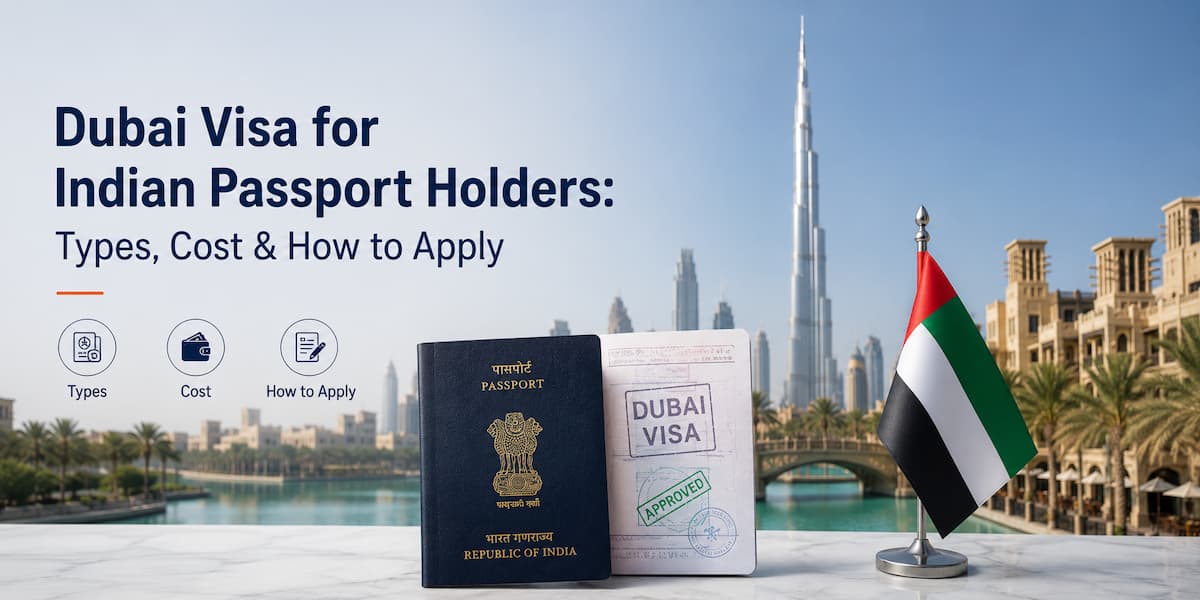
A UAE tourist visa is mandatory for Indian passport holders in almost all cases, and like flights and hotels, processing itself has a seasonal rhythm worth planning around.

Standard Timelines

Standard processing runs 2–4 working days for most Indian applicants; express options can bring this down to 24–48 hours for an added fee. UAE working days run Sunday through Thursday — Friday and Saturday are the weekend — so an application submitted late in the week may not begin processing until the following Sunday, which catches travelers used to a Saturday-Sunday weekend off guard.

When Processing Slows Down

Application volume rises sharply around Diwali, Christmas–New Year, and Eid, and during the Indian summer holiday window (May–July) — all periods where processing can extend by several extra days simply due to the backlog, separate from any issue with your own application. This lines up almost exactly with the peak travel windows covered elsewhere in this guide, which is precisely why it’s easy to overlook until it affects you directly.

Practical Guidance

Two to three weeks ahead is a reasonable standard buffer. During Diwali, Christmas-New Year, Eid, or the summer holiday window specifically, extend that to three to four weeks where possible, and consider express processing if your dates are fixed and close. Apply through your airline’s official channel (Emirates, flydubai, and others offer this) or a reputable agent, since incomplete documentation — not seasonality — remains the single most common cause of delay. For the full document checklist, see our Dubai Visa Guide.

Current entry conditions (as of July 2026):  Since February 2026, the regional US-Israel-Iran conflict has disrupted UAE tourism and airline capacity, with a ceasefire breaking down again in July; the US and a few other governments have maintained caution-level travel advisories for the UAE at points this year. This is separate from visa processing itself, but check your government's current advisory alongside your visa application — conditions are changing quickly enough that this note may be outdated by the time you read it. For the broader day-to-day picture, see our Is Dubai Safe for Indian Tourists? guide. Everything else in this guide reflects Dubai's normal, stable-year pattern; 2026 itself has simply been an atypical year.

Hotel Occupancy Trends

Dubai’s hotels run some of the highest occupancy rates in the world — the city averaged around 78% occupancy across all of 2024 and roughly 81% in the first half of 2025. During specific high-demand event clusters, it goes much higher still: STR (the hotel industry’s benchmark data provider) recorded Dubai occupancy above 96% on individual days in February 2024, when several major events overlapped, with the entire month staying above 80% throughout. That’s the evidence behind “book early” mattering more in December-January than in June: in summer you’re negotiating price; during a genuine peak stretch, well-reviewed properties can sell out entirely, not just get more expensive.

Honest limit on this data: those figures are normal-year averages, not a month-by-month table, and 2026 itself has been unusually volatile — occupancy reportedly fell as low as 10% in some 2026 stretches due to the regional conflict. We won’t quote you an exact “January = X%” figure, because no source we could verify publishes one at that granularity — anyone who does is likely estimating, not reporting.

Illustrative Hotel Price Trend by Month

Illustrative hotel price trend across the year, mirroring the occupancy pattern above.

Ideal Booking Window: 30/60/90 Day Analysis

90 days out

Target this specifically for peak-season dates: December–January, Dubai Shopping Festival, New Year’s Eve, or anything overlapping Diwali or Eid. Based on the occupancy pattern above, this is when specific flight times, higher hotel room categories, and fountain- or fireworks-view rooms are still available — they won’t be at 30 days.

60 days out

The reasonable general-purpose window for most trips outside the sharpest peaks. It balances fare competitiveness with still-solid selection, and comfortably covers visa processing time even with an unexpected delay.

30 days out

Works fine for genuinely off-peak travel, shoulder season or June through September, where demand is naturally lower and last-minute fare drops can actually appear. It’s the riskiest window specifically for peak dates, since good rooms and flight times may already be gone even though the calendar technically allows more time.

Whichever window you land on, it comfortably covers standard visa processing (2–4 working days, extending during peak periods) with room to spare — visa timing shouldn’t be the thing that forces your booking date.

Budget Planning by Category

Six categories move on their own schedule through the year — knowing which is which helps you time the booking, not just the trip.

Flights

Cheapest June–August (see the reasoning above), often 40–50% below the December–January peak — May is a common pricier exception, driven by Indian summer-holiday demand hitting before the true summer lull sets in.

Hotels

Same rhythm as flights, for the same demand-side reasons: floor in June–August, when five-star Downtown or Marina rooms can drop 40% or more below their December rate, peaking hard December through February when occupancy runs tightest.

Attractions

Rarely change list price by season, but Dubai Summer Surprises adds genuine discounts and bundles on top of an already-quiet season.

Packages

Track the same curve as flights and hotels — tour operators often discount summer departures further still, to offset naturally lower demand.

Shopping

Cheapest in the sense of the deepest individual discounts, during Dubai Shopping Festival — though the irony is the whole trip costs more that month, since you’re saving on merchandise while paying peak flight and hotel prices to be there.

Transportation

Doesn’t vary much by season on the metro or standard taxi fares; summer sees a slight rideshare premium during the hottest midday hours, when fewer drivers want to wait outside.

Currency Exchange Timing

A detail specific to Indian travelers: the INR-AED rate itself doesn’t move on Dubai’s tourist season — it tracks broader currency markets, not Dubai’s hotel occupancy. That said, exchanging a large sum right before a peak-season trip (when you’re also paying peak prices) compounds two costs at once if the rupee happens to be weak that month. Where you exchange matters more than when: airport counters and hotel front desks in Dubai typically offer noticeably worse rates than a card with no foreign-transaction fee, or cash exchanged in India before you fly.

CategoryCheapest WindowMost Expensive Window
FlightsJun–Aug, especially JulyDec–Jan, with a May spike
HotelsJun–AugDec–Feb
AttractionsYear-round list price; DSS adds summer discountsHighest demand during DSF
PackagesJun–AugDec–Jan

Best Month by Budget

If budget is genuinely your deciding factor, here’s the same information reframed around a realistic per-person trip cost (flights + hotel, excluding shopping and packages) from India — for the fuller day-to-day number, including food, transport, and attractions, see our Dubai on a Budget breakdown:

Per-Person Budget (Flights + Hotel)Best Month to TargetWhat You Trade Off
Under ₹60,000JulyFull indoor-first itinerary, peak heat
₹60,000–₹95,000April or OctoberMidday heat management, but real outdoor time
₹95,000–₹1,50,000JanuaryPeak pricing, but zero weather compromise
Not a constraintDecemberFull festive spectacle — DSF, National Day, NYE together

What this means for you: by now you should have a target month (from the weather and season sections above) and a realistic budget range for it. The only remaining variable is timing your booking — use the 30/60/90 framework above, and treat visa processing as a fixed 2–4 week buffer around whatever date you land on.

Festivals, Ramadan & Public Holidays

Ramadan

Ramadan is the one factor on this calendar that doesn’t follow the Gregorian months the rest of this guide uses. It runs on the Islamic lunar calendar, roughly 10–11 days shorter than the solar year, so it lands about 10–11 days earlier every year rather than sitting on a fixed date.

In 2026, Ramadan ran from February 18 to around March 19, with Eid al-Fitr celebrated March 19–22. The next holy month, Ramadan 2027, is currently expected to begin around February 8 and run to approximately March 9 — though like all Islamic calendar dates, this is only confirmed after an official moon sighting, so treat it as a planning estimate.

During Ramadan, daytime restaurant hours shorten and many close or curtain their windows until sunset; eating, drinking, or smoking in public before iftar isn’t permitted, a rule visitors are expected to follow just as residents do. Major attractions generally keep their normal operating hours throughout. What you lose in daytime spontaneity, you gain in evening atmosphere — elaborate hotel iftar buffets and cultural programming give visitors a side of Dubai the rest of the year doesn’t show.

Eid al-Fitr and Eid al-Adha

Marking the end of Ramadan and falling roughly two months later respectively, each brings a short but intense spike in regional travel — three to four days of public holidays, family gatherings, and citywide festive programming. Hotel and flight prices tick up for a week or two around both dates, and since they shift with the lunar calendar, any date quoted more than a year out should be treated as an estimate rather than a booking guarantee.

Dubai Shopping Festival

Typically runs from mid-December through late January, six weeks of 25–75% discounts across malls and souks, nightly fireworks, drone shows, and mega-raffles for cars and cash. It’s also the single most expensive stretch of the year to fly and stay in Dubai, so it rewards shoppers and penalizes anyone purely budget-focused.

Dubai Food Festival

Spans several spring weeks, anchored by Dubai Restaurant Week, when hundreds of restaurants offer curated set menus at fixed, discounted prices. Its price and crowd impact is mild compared to DSF — a genuinely good add-on to a spring trip rather than a reason to build one around it, unless dining is your specific focus. Our Dubai Food Guide for Indians goes deeper on where to eat.

New Year’s Eve

Centered on Burj Khalifa, produces one of the most-watched fireworks shows in the world — and the single sharpest hotel price spike of the entire year in Downtown and along the Marina, with fountain- or fireworks-view rooms selling out months ahead.

UAE National Day

December 2–3 commemorates the 1971 unification with fireworks over the Marina and Burj Khalifa and landmark buildings lit in the national colors, layered directly onto an already-expensive December.

School Holidays

The Indian calendar specifically — summer break, the days around Diwali, and the Christmas-New Year window — creates predictable demand spikes from the India side alone, stacking on top of whatever Dubai’s own calendar is doing that month.

EventTypical TimingPrice & Crowd Impact
Dubai Shopping FestivalMid-December–late JanuaryHighest of the entire year
RamadanShifts ~10–11 days earlier yearlyModerate; quieter days, livelier evenings
Eid al-Fitr / Eid al-AdhaEnd of Ramadan / ~2 months laterShort, sharp spike, 3–4 days
New Year’s EveDecember 31Sharpest single-night price spike
UAE National DayDecember 2–3Moderate spike on top of peak season
Dubai Food FestivalSpring, timing varies by yearMild
Dubai Summer SurprisesJuly–AugustNone — layered onto an already-low season

What this means for you: treat this calendar as a filter on the month you’ve already picked, not a new decision. If your chosen month happens to overlap one of these events, decide deliberately whether you want to lean into it (book around it, expect the crowds) or dodge it (shift a week either way) — our Dubai Festival Calendar tracks exact confirmed dates as each year’s schedule is released.

Which Month Is Best for Different Types of Travelers?

Families

November through March, when kids can be outside without heat cutting the day short and both Global Village and Miracle Garden are running. Diwali or winter-break dates overlap Dubai’s own peak season, so lock in rooms as soon as dates are fixed. Our Dubai with Kids guide covers age-specific itinerary pacing.

Couples

April or October hits the real sweet spot: good weather, thinner crowds than the Christmas-New Year rush, and evenings pleasant enough for a sunset cruise or rooftop dinner without paying winter’s premium.

Honeymoon Travelers

Same April-or-October window, but for the suite rates specifically — noticeably cheaper than peak winter for the room category that actually makes a honeymoon feel like one. See our Dubai for Honeymoon guide for room categories worth the upgrade.

Budget Travelers

June through August, unambiguously — flights, hotels, and attraction tickets all sit at their annual floor, often 40–50% below December pricing for the identical trip.

Luxury Travelers

A genuine fork: November–March for the fullest, most polished experience at full price, or June–August for the same five-star suite at roughly half the cost. Pick based on whether the weather or the value matters more to you.

Solo Travelers

Shoulder season offers the easiest balance — good weather, manageable costs, and enough going on to fill an itinerary without needing to plan every hour.

Senior Citizens

November through March keeps heat off the day’s agenda entirely, and winter’s gentler tourist pace means less rushing between attractions.

Adventure Travelers

October through April for consistently safe, comfortable conditions — outside that window, safaris and outdoor activity shrink to narrow early-morning slots only.

Beach Lovers

Split by priority: November–April for comfortable lounging weather, June–October if the sea’s actual temperature (warmest at 32–33°C) matters more to you than the air around it.

Shopping Enthusiasts

Time it to Dubai Shopping Festival, mid-December through late January, for the deepest discounts and the year’s most festive mall atmosphere — our dedicated DSF Guide tracks confirmed dates and raffle details as each edition is announced.

Photographers

Winter’s clear skies give the most reliable golden hour over the Marina or Burj Khalifa; a shoulder-season sunset trades a little clarity for a noticeably thinner crowd in every frame.

Traveler TypeBest MonthsWhy
FamiliesNov–MarComfortable heat, every attraction fully open
CouplesApr, OctGood weather, thinner crowds, better rates
HoneymoonersApr, OctPrivacy and value over peak-season polish
Budget travelersJun–AugLowest flights, hotels, and attraction prices
Luxury travelersNov–Mar or Jun–AugFull experience, or best value — depends on priority
Solo travelersApr, Oct (shoulder)Easiest balance of comfort and cost
Senior citizensNov–MarMinimal heat exposure, gentler pace
Adventure travelersOct–AprSafe, comfortable outdoor conditions
Beach loversNov–Apr (air) / Jun–Oct (sea)Depends on lounging vs. swimming priority
Shopping enthusiastsMid-Dec–JanDubai Shopping Festival
PhotographersNov–MarClearest skies, most reliable golden hour

What this means for you: find your row in the table above — if two traveler types describe your trip (say, a budget-conscious family), the earlier-listed priority usually wins in a genuine conflict. A family on a tight budget is better served by June–August with an indoor-heavy itinerary than by stretching for a November trip you can’t comfortably afford.

Best Time for Popular Dubai Experiences

Desert Safari

November–March for comfortable dune bashing and an evening BBQ at any hour; October and April work with thinner crowds; summer restricts every operator to early-morning or after-dark departures only. Our dedicated Desert Safari Guide covers operator selection and what a fair price actually looks like.

Burj Khalifa

Works year-round — the decks are indoor and air-conditioned — but winter’s clearer skies give a noticeably better sunset view than summer haze allows.

Dubai Marina

November through April rewards an evening stroll or waterside dinner, when the air is comfortable enough to actually linger.

Beaches

November–April for lounging comfort; June–October if you specifically want the warmest sea (30–33°C) rather than the most pleasant air temperature. Swimmable every month of the year — sea temperature never drops below ~22.5°C, even at its coolest in February. Our full Dubai Beaches Guide breaks down which stretch of coastline suits your trip.

Waterparks

Genuinely better in summer, not just tolerable — Aquaventure and Wild Wadi stay open through the heat, and being wet at 40°C is a real comfort advantage paired with the year’s shortest queues.

Theme Parks

IMG Worlds and Motiongate are largely indoor, making them one of the most reliable summer anchor activities on this list with almost no seasonal downside.

Outdoor Dining

November–April, when a rooftop table is a pleasure rather than a heat-management exercise; summer pushes most of this indoors.

Yacht Cruises

October–April for comfort; a summer cruise still works if scheduled specifically around sunset rather than midday.

Old Dubai

November–March rewards the souks, abra crossings, and Creek-side walks with actually enjoyable walking weather rather than something to rush through.

Global Village

Only operates mid-October through May — timing your visit within that window isn’t optional, since the attraction simply doesn’t exist the rest of the year.

Miracle Garden

Same seasonal window as Global Village, roughly October–May, closed through summer for the straightforward reason that the flowers wouldn’t survive it.

ExperienceBest MonthsNotes
Desert SafariNov–MarOct/Apr good alternatives; summer is dawn/dusk only
Burj KhalifaYear-roundWinter gives the clearest views
Dubai MarinaNov–AprEvenings are the highlight
BeachesNov–Apr (lounging) / Jun–Oct (sea temp)Depends on your priority
WaterparksYear-round, especially Jun–SepGenuinely better in summer
Theme ParksYear-roundIndoor, minimal seasonal impact
Outdoor DiningNov–AprSummer pushes this indoors
Yacht CruisesOct–AprSummer works if scheduled at sunset
Old DubaiNov–MarWalking-heavy, needs cool air
Global VillageMid-Oct–MayClosed entirely outside this window
Miracle GardenOct–MayClosed entirely outside this window

What this means for you: one pattern that cuts across every activity above and isn’t obvious from the table — the UAE weekend runs Friday–Saturday, not Saturday–Sunday. Regardless of season, Thursday evening through Saturday sees a local and regional-visitor crowd bump at malls, beaches, and Global Village that has nothing to do with tourist season. If any of these activities are a priority, a Sunday-to-Wednesday visit avoids that layer of crowding entirely, on top of whatever the seasonal pattern already tells you.

Common Mistakes When Choosing Travel Dates

  • Choosing solely by airfare — a cheap fare during a heatwave, or a week when your target attraction is closed for the season, isn’t actually a good deal.
  • Ignoring school holidays — Diwali, summer break, and Christmas-New Year all drive demand spikes from the India side alone, on top of Dubai’s own calendar.
  • Booking without checking Ramadan dates — it shifts roughly 10–11 days earlier every year, so a date that was clear last year may not be this year.
  • Underestimating summer heat — a sun-up-to-sundown outdoor itinerary for July or August is the single most common mismatch on this list.
  • Assuming winter is always best — it’s the best choice for weather specifically, not automatically for budget or crowds.
  • Booking festivals without reservations — DSF, New Year’s Eve, and National Day all draw huge simultaneous demand for the same tables and rooms.

These share a root cause: optimizing for one visible factor — usually price or popularity — without checking what else that date brings. Check weather, crowd level, and the event calendar together, not just the fare on screen.

Frequently Asked Questions

What is the best month to visit Dubai from India?

No single best month — it depends on your priorities. January–February balance comfortable weather, open attractions, and DSF energy, at peak-season prices. If budget matters more, June–August offers the same city for a fraction of the cost, with real heat limiting outdoor time to mornings and evenings.

Which month has the best weather?

January typically edges out the rest — 24°C highs, 15°C lows, and the year’s lowest humidity discomfort. December and February are close behind, so any of the three works if weather is your only deciding factor. Temperatures climb steadily from March, so treat January–March as one comfortable block.

Which month is the cheapest?

July stands out as the single cheapest month for flights based on multiple fare-comparison sources, with June and August close behind. Hotels follow the same pattern, often 40–50% below the December–January peak. May is a common exception — a pricier pocket from the start of Indian summer holidays, just before the real lull sets in.

Is summer worth visiting?

Yes, if you plan around the heat rather than against it. Malls, waterparks, and indoor attractions are all excellent, prices sit at their annual lowest, and queues are the shortest of the year. Outdoor sightseeing needs to happen in early morning or evening slots only — treat the itinerary as indoor-first and it’s a genuinely good, affordable trip.

Is Ramadan a good time to visit?

Yes, especially for a more culturally rich, less crowded experience. Daytime dining is more restricted, and eating or drinking in public before sunset isn’t permitted for visitors either. In exchange, elaborate hotel iftar buffets and evening programming show a side of Dubai the rest of the year doesn’t. Confirm that year’s specific dates before booking — they shift 10–11 days earlier annually.

Which month is best for shopping?

Mid-December through late January, during Dubai Shopping Festival, for the deepest discounts and biggest events of the year. Dubai Summer Surprises (July–August) is the budget-friendly second choice — smaller discounts, but noticeably thinner mall crowds if you’d rather shop without fighting winter’s foot traffic.

Which month is best for Desert Safari?

November through March offers the most comfortable conditions for dune bashing and an evening barbecue at any hour. October and April work well too, with thinner crowds than peak winter. In summer, stick strictly to early-morning or after-dark departures — midday desert heat is a genuine safety concern most operators restrict against.

Which month is best for families?

November through March — comfortable enough for kids outdoors without constant heat breaks, with Global Village and Miracle Garden both open. If your trip is tied to Diwali or Indian winter break, book early, since you’re overlapping Dubai’s own peak season from both directions at once.

Which month is best for honeymoon couples?

April or October consistently comes out ahead — good weather, meaningfully better suite rates than the Christmas-New Year rush, and a quieter, more private version of the same city, without competing with families and tour groups for the same tables and viewpoints.

Which month has the fewest crowds?

July and August by a wide margin, followed by June and September. For lighter crowds without committing to full summer heat, late November or early March offers a smaller-scale version of the same quiet effect, in a considerably more comfortable season.

Can Indians visit Dubai during the Indian summer holidays?

Yes, and plenty do — it’s one of the cheapest windows of the year, since Dubai’s own demand is lowest exactly when Indian schools are out. The trade-off is real heat (regularly 40°C-plus), so plan an indoor-first itinerary: malls, water parks, and aquariums, with outdoor time limited to early morning or evening.

Which month likely has the lowest hotel occupancy?

No verified month-by-month table exists (see the Hotel Occupancy section above for why), but the demand logic is clear: July and August, when leisure travel from both India and Dubai’s usual visitor base is lowest simultaneously, are almost certainly the quietest — consistent with flights and rates both bottoming out then too.

Is Dubai safe and comfortable for tourists during Ramadan?

Yes. Attractions keep normal hours, and Ramadan doesn’t restrict where tourists can go. The etiquette that matters: no eating, drinking, or smoking in public during daylight fasting hours, and slightly more modest dress outside tourist zones. Most visitors find it genuinely welcoming, if quieter by day and livelier after sunset.

Which month is best for a family with kids under 5?

November through March, more strictly than for older kids — toddlers overheat and dehydrate faster, narrowing summer’s already-tight outdoor windows further. Aim for December or January specifically: mildest heat, shortest walks between indoor stops, and stroller-friendly evenings like Global Village.

Is Dubai as humid as Goa or Mumbai?

Not quite, and the pattern runs opposite. Dubai’s humidity peaks in winter (~59–61% in Dec–Jan) and drops lowest in May (~42%), close to the reverse of coastal India’s monsoon pattern. It combines with much higher temperatures for more of the year, though, so the “feels like” gap is often more extreme, especially April–September.

Can I swim in the sea in January?

Yes — January’s sea temperature runs around 23°C, cooler than summer but genuinely swimmable, closer to a mild ocean swim than anything cold. February is marginally cooler still (~22.5°C, the year’s lowest) but remains swimmable throughout.

Which month gives the clearest Burj Khalifa views?

January and February, when winter’s clear skies and minimal haze give the most reliable visibility and golden-hour photography. From April onward, rising humidity introduces a soft haze that’s most noticeable May through September — the view is still worthwhile, just less crisp.

Which month has the shortest queues at major attractions?

July and August, by a wide margin — the same demand collapse that makes flights and hotels cheapest also thins out lines at Burj Khalifa and Museum of the Future. September and early June offer a smaller version of the same effect without full summer heat.

Final Recommendation

When Should you visit dubai? A Decision Guide, What matters most for your trip

Best Weather, Lowest Prices, Fewer Crowds, Traveling with Kids, Shopping Festival

When should you visit Dubai? A quick decision guide based on what matters most to you.

The instant-scan version, decision by decision:

If Your Priority Is…GoBecause
Best weather, no compromisesDec–Feb24–27°C, lowest humidity discomfort of the year
Lowest possible costJun–Aug (esp. Jul)Flights and hotels both hit their annual floor
Fewer crowds, still comfortableLate Nov, early Mar, or Apr/OctNear-winter weather, a fraction of the crowd
Traveling with childrenNov–MarKids can be outside without constant heat breaks
Outdoor sightseeing as centerpieceNov–AprEvery option open, no heat-driven restrictions
Shopping festivalsMid-Dec–JanDubai Shopping Festival, the year’s deepest discounts
First Dubai trip, safest choiceNov–MarWeather never becomes the story of your trip

If you only remember one thing from this guide, make it this: Dubai isn’t a destination with one perfect season — it’s a destination where weather, budget, crowds, and festivals all move together, so choosing the right month really means choosing which trade-off you’re happiest making.

Next: our Best Area to Stay in Dubai guide and 5 Nights 6 Days Itinerary, or compare live packages built around these same trade-offs through Trekhops directly.

No more excuses – make your health a priority today

Get Started

Leave a Comment