
By Trekhops Editorial Team, Dubai Travel Specialist · Published Jan 13, 2026 · 10 min read
Before the towers, Dubai was this: a creek, wooden boats, and merchants on both banks. The souks of Deira and Bur Dubai are where that city still operates — the Gold Souk holding an estimated ten tonnes of gold on any given day, the Spice Souk perfuming the lanes next door, and a one-dirham wooden abra stitching the two banks together. For Indian visitors this half-day carries an extra layer: Dubai gold is genuinely cheaper than home, but the customs rules for carrying it back are stricter and murkier than most shopping guides admit. This guide covers both the romance and the paperwork.
Key Takeaways
- Gold runs roughly ₹3,000-3,500 cheaper per 10g than India; the negotiation happens on making charges, never the gold rate
- Indian duty-free allowance: 20g/₹50,000 for men, 40g/₹1 lakh for women — jewellery only, eligibility tied to time abroad under CBIC rules; short-trip tourists may not fully qualify
- The abra across Dubai Creek is still AED 1 — the world’s best-value boat ride
- Gold Souk: ~10am-10pm Sat-Thu (many shops break 1-4pm), Fridays from 4pm only
- Metro Green Line’s Al Ras and Gold Souq stations put you a five-minute walk from the gold; everything else is walkable from there
- Tourists reclaim most of the 5% VAT on jewellery at the airport — keep the tax-free tag and invoice
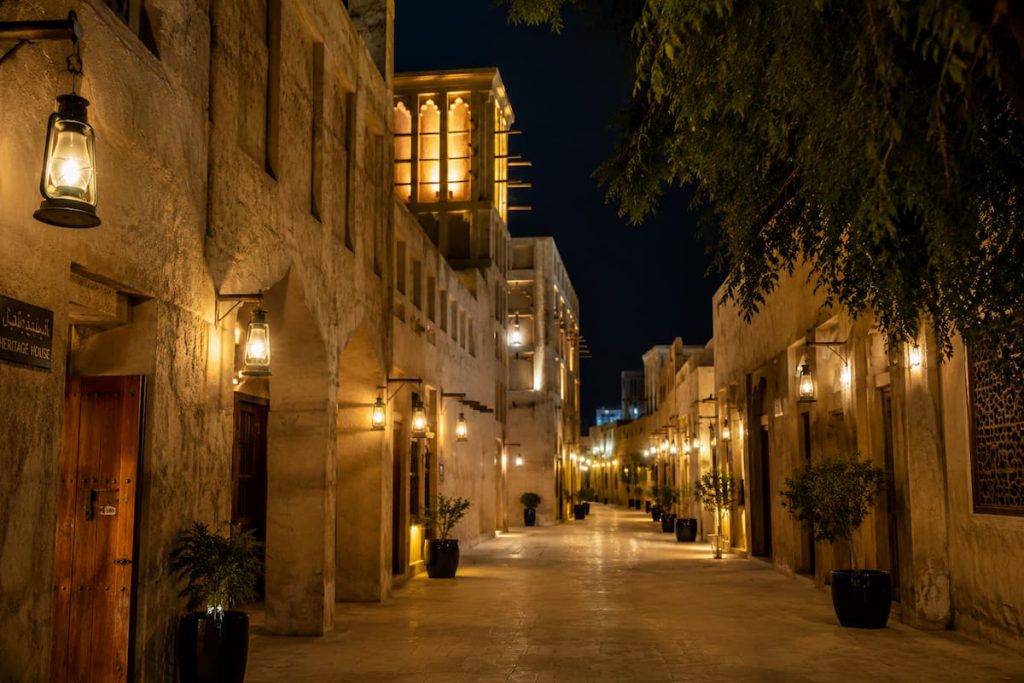
The Geography in One Minute: Two Banks, One Creek
Everything in Old Dubai arranges itself around the Creek. On the Deira bank sit the Gold Souk and Spice Souk, practically next door to each other, served by the Metro Green Line’s Al Ras and Gold Souq stations. On the Bur Dubai bank sit the Textile Souk, the Al Fahidi Historic District with its wind-tower lanes, and the restored Al Seef waterfront. Connecting the two banks: the abras — open wooden water taxis that have crossed this water for generations and still charge one dirham per person for the five-minute ride. That single dirham is the best money you’ll spend in Dubai, and the crossing itself, with dhows moored along the wharves, is the closest the city comes to time travel.
The whole district runs on a fraction of the budget the rest of Dubai demands: Metro fare, an abra or two, and whatever you choose to buy. It’s the natural morning half of the itinerary day we sketched in our 5N/6D plan — cool hours in the lanes, air-conditioned afternoon elsewhere.
The Gold Souk: How Buying Actually Works
Three-hundred-plus jewellers line the covered lanes of the Deira Gold Souk, their windows stacked with bridal sets, bangles, and showpieces up to and including the Najmat Taiba — at 63kg, the Guinness-certified heaviest gold ring on earth. The market’s credibility is structural, not promised: Dubai Municipality inspects the shops, every piece is hallmarked, and legitimate jewellers weigh items on visible scales in front of you. A shop that won’t put your piece on the scale is a shop you walk out of.
Understanding the price is the whole game, because it has two parts. The gold rate per gram is set by international markets, posted daily outside shops, and identical everywhere — nobody negotiates it, and anyone offering “cheaper gold” than the board rate is selling you something other than gold. The making charge — the craftsmanship fee layered on top — is where shops compete and where you negotiate: opening offers of 15-20% below the quoted charge are normal, cash payment typically unlocks another 3-5%, and the savings versus Indian jewellers’ making charges are often larger than the gold-rate gap itself. Insist on a detailed invoice showing weight, purity, rate, and making charge separately — you’ll need it twice: once for the VAT refund, once for Indian customs.
On VAT: the UAE’s 5% applies to jewellery (investment bars and coins are exempt at sale), and tourists reclaim the bulk of it through the airport refund scheme before departure. Ask the shop for the tax-free tag at purchase; the refund kiosks at DXB handle the rest.
The Section That Saves You at the Airport: India’s Gold Rules
Here is the part most “Dubai gold shopping” content skips, and it’s the part that determines whether your bargain survives the flight home. India regulates inbound gold under the CBIC’s Baggage Rules, and the framework has three tiers worth understanding before you spend a dirham.
The duty-free allowance — the number everyone quotes — is 20 grams capped at ₹50,000 in value for men, and 40 grams capped at ₹1 lakh for women. Two catches inside it: it covers jewellery and ornaments only — gold coins, bars, and biscuits never qualify, regardless of value — and eligibility is tied to how long you’ve stayed abroad, with the full allowance generally reserved for those returning after an extended period rather than a one-week holiday. The concessional-duty tier lets eligible longer-stay passengers bring up to 1kg total on payment of duty. Everything else — excess quantities, ineligible passengers, undeclared bars — attracts steep full-rate duty, and undeclared gold discovered at screening risks confiscation outright.
The honest guidance for a tourist on a typical 5-7 day trip: treat the allowance numbers as a ceiling you may not fully qualify for, verify your specific situation against the current CBIC baggage rules (cbic.gov.in) before any large purchase, carry the original invoice and purity certificate in your hand luggage, wear-or-carry modest jewellery purchases rather than burying them in checked bags, and if you’re anywhere near the limits, walk the Red Channel and declare — the duty on a modest excess is an inconvenience; a seizure is a holiday-ruining event. Rules and rates here change with budgets and notifications, so this is the one purchase where ten minutes on the official site before you shop is genuinely part of the shopping.
The Spice Souk: Five Minutes Away, a Different Century
A short walk from the gold, the Spice Souk announces itself by smell before sight — saffron, cardamom, dried limes, frankincense, and rose stacked in open sacks along lanes that have traded this way since before the oil. It costs nothing to wander and photograph, and it’s Old Dubai’s most atmospheric corner precisely because it’s still a working market, not a recreation. If you buy, the honest picks are saffron (meaningfully cheaper than Indian retail — verify colour and aroma, and buy threads, not powder), gift boxes of dates, and frankincense with a small burner. Prices open high for tourists; friendly haggling is expected, and buying multiple items from one stall is your leverage.
Across the Creek: Textile Souk, Al Fahidi, and Al Seef
The one-dirham abra deposits you on the Bur Dubai bank at the Textile Souk — a covered lane of fabric merchants heavy with Indian and Pakistani silks, pashminas, and linen, plus tailors who’ll turn a purchase into a garment within days. Steps away begins Al Fahidi Historic District: restored wind-tower houses in coral-and-gypsum lanes, now holding small galleries, courtyard cafes, and cultural centres — the single best free wander in the city, at its best before 11am. Follow the water south and the lanes flow into Al Seef, the newer heritage-styled waterfront whose creekside restaurants make it the natural lunch or evening bookend to the whole circuit. Meena Bazaar, Bur Dubai’s long-standing Indian shopping quarter, sits in the same district — familiar jewellers and fabric houses, and a reminder of how long this bank has been half-Indian in character.
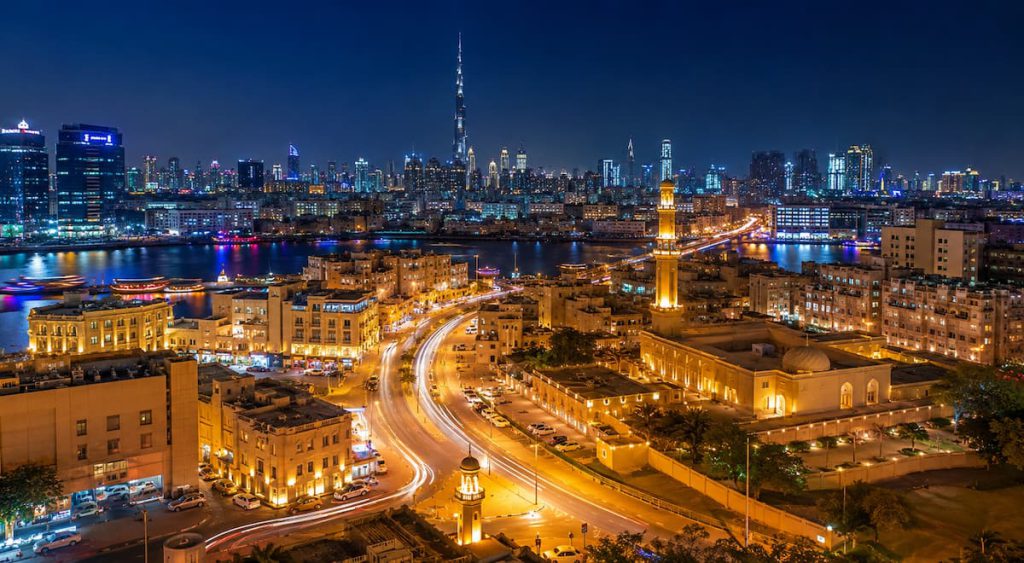
Timing, Haggling, and Souk Etiquette
The rhythm to plan around: souks open around 10am Saturday-Thursday, many shops shutter for a 1-4pm midday break, everything runs bright until about 10pm — and on Fridays the Gold Souk doesn’t open until 4pm for congregational prayers, the single most common scheduling mistake visitors make. Weekday mornings give you empty lanes and unhurried shopkeepers; evenings give you the full glittering spectacle. Winter (November-March) makes the outdoor walking genuinely pleasant, per the seasonal logic in our best-time guide.
On conduct: haggling is a conversation, not a confrontation — smile, counter low, accept tea if offered, and remember that walking away politely is both acceptable and your strongest move. Touts offering “copy watches” and detours to hidden shops are persistent in the lanes; a firm, pleasant “no thanks” on repeat is the entire required technique. Dress modestly (shoulders and knees covered travels well here), and ask before photographing shopkeepers or their displays up close — most say yes when asked, and the asking matters.
The Half-Day Route That Ties It Together
The sequence that works: Metro Green Line to Al Ras by 10am → Gold Souk while it’s calm (browse first, buy on the return pass once you’ve compared) → Spice Souk next door → walk five minutes to the Deira Old Souk abra station → one dirham across the Creek → Textile Souk → Al Fahidi lanes and a courtyard cafe → finish at Al Seef for a late creekside lunch. Three to four unhurried hours, almost all of it free, ending a short Green-Line hop from anywhere else in the city — the fare mechanics are in our Metro guide. Gold buyers should invert one step: compare in the morning, then return for the actual purchase in the evening with your negotiating research done.
To walk the whole route on video first — spice lanes, gold windows, and the abra crossing in real time:
Frequently Asked Questions
Is gold really cheaper in Dubai than India?
Generally yes — roughly ₹3,000-3,500 per 10 grams by common comparison, driven by lower taxes and competitive making charges, plus a reclaimable 5% VAT. The rate itself is international; the savings live in the making charges.
How much gold can I carry from Dubai to India?
The headline duty-free allowance is 20g/₹50,000 for men and 40g/₹1 lakh for women — jewellery only, with eligibility tied to duration abroad under CBIC’s Baggage Rules. Short-holiday tourists may not fully qualify; check cbic.gov.in before buying heavily and keep every invoice.
How much is the abra ride across Dubai Creek?
AED 1 per person, paid to the driver — about five minutes bank to bank, running continuously through the day.
Can you bargain at the Gold Souk?
On making charges, yes — start 15-20% below the quote, and cash usually earns a few percent more. The per-gram gold rate is fixed by the daily market and non-negotiable.
What are the Gold Souk timings?
Roughly 10am-10pm Saturday-Thursday with a common 1-4pm midday break, and Fridays from 4pm only. Weekday mornings are quietest.
Is the Spice Souk worth visiting if I’m not buying?
Yes — it’s free to wander, five minutes from the gold, and the most photogenic corner of Old Dubai. Saffron and date gift packs are the worthwhile buys if you do spend.
The Bottom Line
The souks are the cheapest great half-day in Dubai and, for gold buyers, potentially the most expensive mistake — the difference lies entirely in preparation. Walk the circuit in the cool morning, negotiate making charges rather than gold rates, demand itemised invoices, claim your VAT at the airport, and know your CBIC position before the shop, not at the Red Channel. Do that, and Old Dubai delivers both the atmosphere the towers can’t and savings that survive the flight home.
Prefer a guided run at it — with the haggling norms and the paperwork explained on the spot? Our Dubai tour packages include the Old Dubai circuit with a guide who’s watched a thousand negotiations, which turns out to be the best negotiating asset of all.
Trekhops Editorial Team is a Dubai Travel Specialist, who has fielded the “how much gold can I carry back” question more times than any other.