By Trekhops Editorial Team, Dubai Travel Specialist · Published Jan 12, 2026 · 10 min read
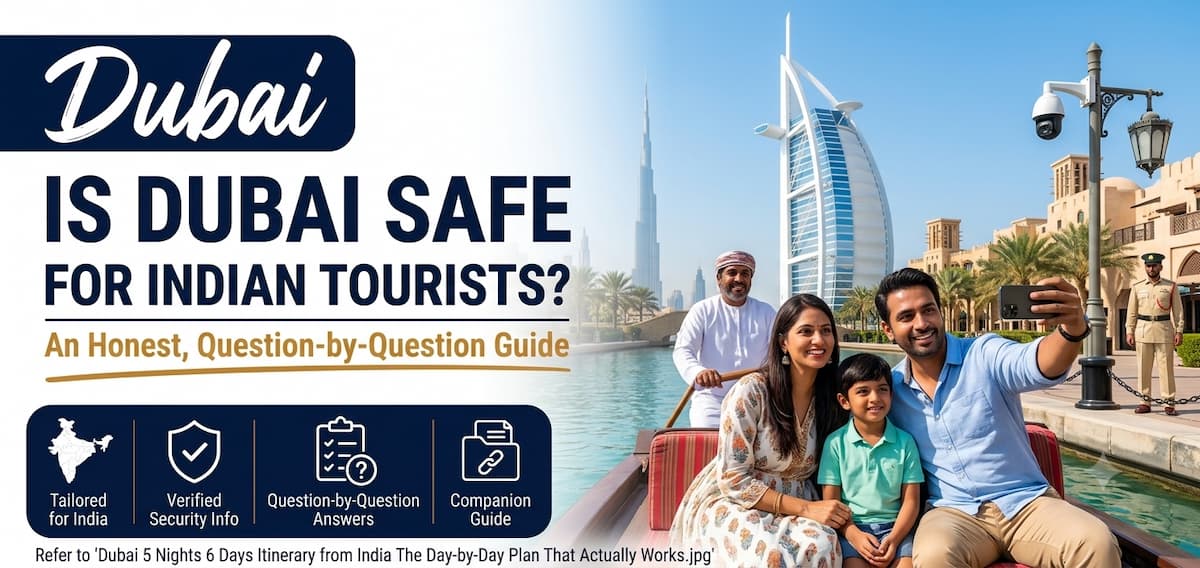
Let’s name what people actually type into Google before a Dubai trip, because it’s rarely “is there street crime.” It’s: will I get in trouble for a drink? Can my wife wear what she wants? What if I’m carrying my regular medicines? Is it okay for my daughter to travel there alone? The honest answer to the crime question is boringly reassuring — and the honest answer to the law-and-culture questions deserves more than the one-line “just be respectful” most guides offer. This guide takes both seriously.
Key Takeaways
- Dubai ranks among the world’s safest major cities, and violent crime against tourists is genuinely rare
- The real risks for Indian visitors are legal missteps — alcohol in the wrong place, unapproved medicines, photographing people — not theft or assault
- Solo female travel is well-supported: women-only Metro cabins, women-driven taxis, and strong public-space safety
- Carrying medicines from India needs attention: controlled substances require prior MOHAP approval, not just a prescription in your bag
- Emergency numbers: 999 police, 998 ambulance, 901 non-emergency — and Dubai Police run tourist-oriented Smart Police Stations
- Indians are Dubai’s largest visitor group; this is one of the most India-familiar cities outside India itself
The Crime Question, Answered With Actual Numbers
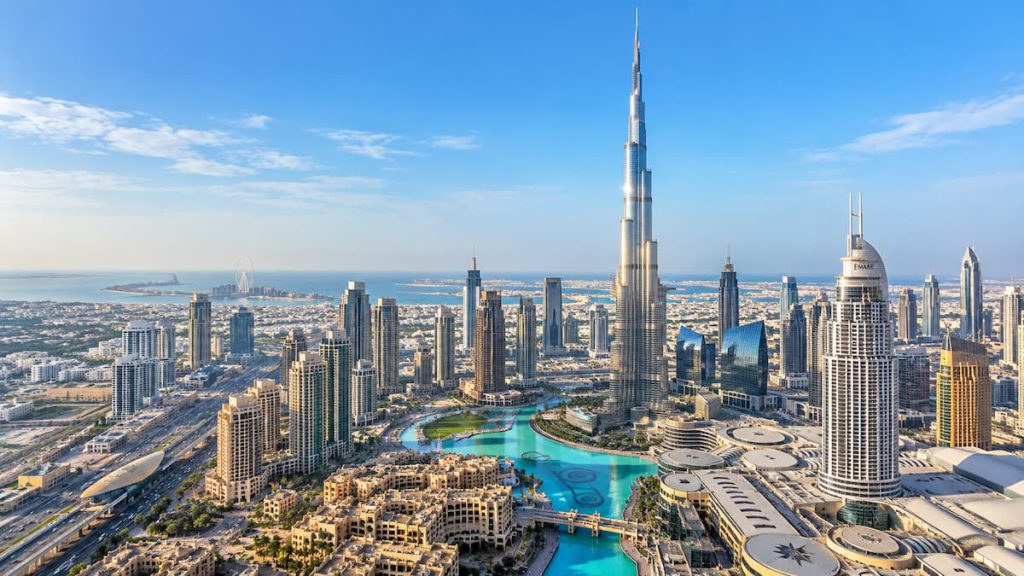
On the measure most people mean by “safe,” Dubai is exceptional. In Numbeo’s Global Safety Index for 2026 — the largest crowd-sourced comparison of its kind, covering over 400 cities — Dubai scored 83.9, placing it sixth safest in the world, with UAE cities filling most of the top five and the UAE ranked the safest country overall. For context, that score sits far above London, New York, or Paris on the same index. Petty theft exists as it does everywhere, but the bag-snatching, pickpocketing-as-industry, and street hustle that shape travel behaviour in many tourist cities are conspicuously absent here.
Why it holds: a heavily resourced, technology-forward police force, consistent enforcement, and an economy where the overwhelming majority of residents are expatriates whose livelihoods depend on staying on the right side of the law. Walking back from a late dinner through the Marina or Downtown feels — and statistically is — safer than the equivalent walk in most cities Indians commonly visit. You’ll notice the absence of the low-grade vigilance you carry elsewhere within a day or two.
The Real Risk Isn’t Crime — It’s the Rulebook
Here’s the honest reframe: for a visitor from India, the meaningful risks in Dubai are not things done to you but things done by you without realising they’re offences. The UAE enforces laws that are looser or unwritten elsewhere, and “I didn’t know” is not a defence. The good news is the list of tourist-relevant rules is short, learnable, and — once known — easy to live within. The next three sections cover the ones that actually catch travellers, in descending order of how often they do.
Alcohol, Public Behaviour, and Photography: The Big Three
Alcohol is legal and everywhere — in licensed venues. Hotel bars, restaurants, beach clubs, and nightclubs all serve freely to visitors 21 and over. What’s penalised is the transition into public: drinking on the street or beach, carrying open alcohol, and above all being visibly drunk in public spaces. The practical rule: drink where you’re served, take a taxi back, and don’t let the night spill onto the pavement. Never, under any circumstances, drink and drive — the legal blood-alcohol limit is zero.
Public behaviour runs conservative by law, not just custom. Hand-holding for couples is fine; kissing and intimate contact in public can draw complaints and penalties. Swearing, rude gestures, and aggressive public arguments — including the digital kind, in messages and social posts — are treated as offences, and road-rage gestures at other drivers have genuinely landed tourists in legal trouble. Dress codes are more relaxed than reputation suggests: normal resort wear is fine almost everywhere, swimwear belongs at pools and beaches only, and malls and government buildings expect shoulders and knees covered — a standard most Indian travellers meet without thinking.
Photography carries a rule India doesn’t have: photographing people without their consent — especially women and families — is an offence, as is photographing government buildings, military sites, and some ports. The skyline, the attractions, yourselves: unlimited. Strangers in your frame: ask, or reframe.
The Medicines Section Every Indian Family Should Read Twice
This is the rule that catches well-prepared, entirely innocent travellers — the family carrying a parent’s full medicine kit, the traveller with a strip of sleeping tablets. The UAE maintains a controlled-substances list that includes medicines sold routinely in India: certain strong painkillers (codeine combinations, tramadol), sleep aids, anti-anxiety and psychiatric medications, and some cough syrups. Carrying these without prior approval can be treated as drug possession — the same zero-tolerance framework that covers narcotics.
The safe procedure: check every medicine you’re carrying against the UAE Ministry of Health and Prevention (MOHAP) controlled list before flying; for anything on it, apply for the electronic approval through MOHAP’s online permit service ahead of travel; and for everything else, carry original packaging plus a doctor’s prescription. Quantities should match your trip length — a personal supply, not a family stockpile. Ten minutes of checking before you pack removes the single most serious avoidable risk on this whole page.
Solo Women, Families, and Who Feels Safe Where
For solo female travellers, Dubai is one of the more supportive major cities: streets and transit are well-lit and monitored, the Metro has a dedicated women-and-children cabin, pink-roofed taxis with women drivers can be requested, and harassment in public spaces is both rare and taken seriously when reported. The sensible baseline still applies — licensed taxis or ride-hailing late at night rather than walking unfamiliar stretches, hotels in areas with evening footfall (Downtown, Marina, Al Barsha all qualify), and live location shared with family on desert excursions. None of that is Dubai-specific caution; it’s just travel.
For families, the city is built for you — child-friendly attractions, clean public facilities, safe public spaces late into the evening, and an enormous resident Indian community that makes everything from food to language to festival timing feel familiar. Kids’ safety concerns here are the universal ones (crowds at the fountain show, sun and hydration) rather than anything local. Area-wise, there is no tourist district to avoid: Deira and Bur Dubai are older and busier, not unsafe; the caution list is really just “don’t wander industrial zones at night,” which no itinerary does anyway.
If Something Does Go Wrong: The System You’re Dealing With
Dubai’s emergency and police infrastructure is genuinely tourist-oriented. 999 reaches police, 998 ambulance, 901 the non-emergency line; English works on all of them, and Hindi frequently does too. Dubai Police operate Smart Police Stations — unstaffed, 24/7 kiosks in malls and tourist areas where you can file reports without visiting a station — plus an app with an SOS feature and case tracking. Lost passports route through the Indian Consulate in Dubai, which is one of India’s busiest missions worldwide and correspondingly practised at emergency travel documents.
Two honest notes for completeness. First, if you’re involved in a legal issue — a road accident, a payment dispute, an offence report — expect a process-driven system: statements, case numbers, and sometimes a travel hold until resolution. It’s orderly rather than hostile, but it is thorough, which is one more reason the prevention sections above matter. Second, buy travel insurance that covers medical treatment; healthcare here is excellent and priced accordingly, and an insured hospital visit is an inconvenience where an uninsured one is a budget crisis.
How Dubai’s Risk Profile Actually Compares
For a video treatment of the same crime-versus-laws distinction this guide is built on:
Frequently Asked Questions
Is Dubai safe for Indian tourists?
Yes — Dubai consistently ranks among the world’s safest major cities, violent crime against tourists is rare, and Indians are the city’s largest visitor group. The practical risks are legal and cultural missteps, not crime.
Is Dubai safe for solo female travelers from India?
Broadly yes — women-only Metro cabins, women-driven taxis, and strong public-space safety all support solo travel. Standard precautions still apply: licensed taxis at night and hotels in areas with evening footfall.
Can you drink alcohol in Dubai as a tourist?
Yes, in licensed venues — hotel bars, restaurants, and clubs. What’s penalized is drinking in unlicensed public places and public drunkenness. The driving limit is zero.
What medicines can I carry to Dubai from India?
Ordinary medicines are fine with original packaging and a prescription. Controlled substances — including some common painkillers and sleep aids — need prior approval through MOHAP’s online system before you fly.
Is public display of affection illegal in Dubai?
Holding hands is fine; kissing and intimate contact in public can attract complaints and penalties. Save it for private spaces.
Which emergency number should tourists use in Dubai?
999 for police and emergencies, 998 for ambulance, 901 for non-emergency matters. Dubai Police also run tourist-friendly Smart Police Stations and an app with SOS.
The Bottom Line
Dubai’s safety question splits cleanly in two, and both halves have good answers. On crime, it’s one of the safest cities an Indian traveller will ever visit — the index numbers and the lived experience agree. On law, the rulebook is stricter than home in a handful of specific, learnable ways: licensed-venue drinking, public restraint, consent before photographing people, and — the one that matters most — checking your medicines against the MOHAP list before you pack. Learn that short list once and the entire subject stops being a worry.
With safety settled, the rest of the planning stack is here: the visa guide, the when-to-go guide, and the full 5N/6D itinerary. And if you’d rather travel with the logistics — and the local know-how — handled end to end, our Dubai tour packages come with exactly that.
Trekhops Editorial Team is a Dubai Travel Specialist, who answers the medicines question more often than any other.